On a mission to become a better writer, thinker, and entrepreneur • Ex-dentist, now building an internet business (at ~$500k/year)
What happens when you write 3,000 words a day
|
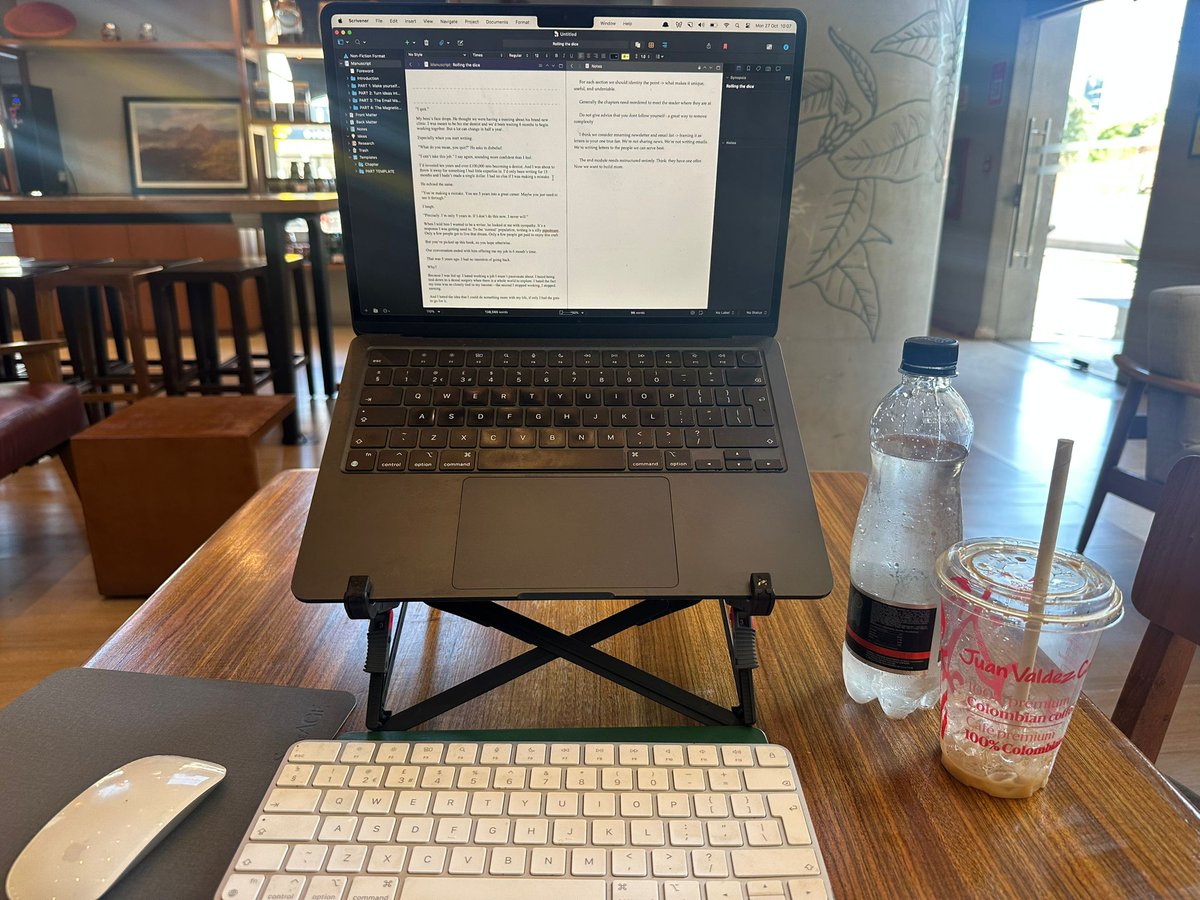
2 months ago, I lost the draft of my book, Magnetic Writing, when my phone was robbed and my Mac wiped. I was devastated. I’d written 140,000 words over a year, and the thought of investing that much time again filled me with dread. But then I heard writer Nat Eliason say how he wrote 5,000 words per day for the second draft of his book. I decided to give it a go. 2 week ago, I finished the (new) first draft. It took 33 days, and I averaged 3,688 words per day—including fulfilling my client work, creating content, and going on holiday. What helped the most had nothing to do with working harder. What I learned from the writing challengeA while back, I tweeted this: You can get more done in 2 hours of focused work than most people do in 8 hours of f**king around. Rewriting the book was an interesting challenge on this take. I can write 1,000-1,500 words an hour, but rarely for 5 hours a day (the quality drops off pretty dramatically at hour 3). A typical day looks like this:
But I’ll be honest: when writing the first version of Magnetic Writing, I struggled to execute the work periods well. I now understand what Tim Ferriss meant when he said a book will demand a lot from you, and that you have to be willing to go all in. When I found myself tired or overwhelmed, which was more than I’d like to admit, I would flick over to Twitter, or hop on Slack, or do anything but face the work. This became a horrible loop. I would complain that I didn’t have enough time, then use my time poorly, which makes me feel agitated because I didn’t have enough time. Three simple decisions made all the difference (the third being the most important). First, I began working to a timer. It sounds basic, but a timer is a great accountability tool. I used Liquid Timer, which would overlay Scrivener, my book-writing software, and pause it every time I stopped working. I quickly realised 90 minutes of deep work was more like 120 minutes, which became a strong incentive to work intensely for the 90 instead.
Second, I activated locked mode on Freedom. If you don’t know Freedom, it is an app-blocking software. I normally block social media/email on my phone and laptop for 16 hours of the day. But I never used locked mode until now, and damn, I am sorry I didn’t. Locked mode stops you from shutting the software down. The relief my body feels when I physically can’t get on is palpable. And then I just get back to work. Third, I took deep rest as seriously as my deep work. I’ve never been great at resting. A lot of my self-worth is tied to my productivity, so I feel guilty when I take proper downtime. But the more I write, the more I realise that rest is where the magic happens. Let me explain. In the past, I would check social media between work sessions. I’d listen to podcasts at the gym and watch YouTube while I eat. I’d take calls or devour more podcasts when walking. I thought the more I consumed, the smarter I would become. But the end result was that I finished most days flat-out exhausted. And often unfulfilled, too. I’d be left wondering, ‘is this it?’—which again, triggers a harder working loop as I try to improve what was wrong. The book challenge helped cut through the bullshit. I knew I had to rest more, but I didn’t expect how effective and enjoyable it was. Here’s what I found: The best way to rest your mind is to be in your body. I first stumbled across body awareness when I began Somatic Therapy. As a person who used to pride himself on thinking all the time, it has been nothing short of life-changing. The body has a lot to offer that your brain does not. Calm, clarity, creativity—you don’t think your way to these things, you feel them. For example, in between my first deep work sessions, I will walk for 20 minutes and try to be as present as possible. I feel the pressure soles of my feet, enjoy the sun on my skin as I wait for my coffee, and breathe the fresh air as I listen to conversations around me. The phone stays at home. After the second deep work block, I am creatively tapped. So I hit the gym, but without podcasts. I try to focus on the feeling of exercise. This becomes meditative in itself. Then I enjoy some food and get back to writing. If I need another rest, I’ll meditate, stretch, or take another walk. At the end of the day, I would actually try to switch off—because I knew the better I slept, the better I’d write tomorrow. The decision to rest would take work. I’m finding it harder to slow down, especially the more powerful Claude gets. I’m well aware of the paradox that the more AI I use to save time in my business, the less time I feel like I have. But that’s an essay for another time. Some days I would break my commitment. And every time I paid the price. I’d end up more tired, with less good work, and a lot more frustration. As I entered the second half of my book, I had learned enough to listen to this signal. I did my work, I enjoyed my peace, and I put in the reps. The end result was 121,700 words in 33 days. And, if I’m honest, a better version of my first attempt. Of course, some of that was through memory. But most of it was through not just being present in the work, but present in the rest too. I know this isn’t the sexiest message—you can’t exactly meditate your way to a million dollars. But the older I get, the more I am convinced being in a hurry is a terrible way to live your life. Not just from a peace perspective, but from a productive perspective, too. The magic happens in the space, Kieran P.S. I’ve had some great client wins during the book process. One client just made $30k with one workshop, two have launched new offers, another started writing online for the first time 3 weeks ago and crossed her first 100 subscribers. They are all following the same process. If you care about doing good work and building a business around ideas you’d believe in, I’m holding a workshop to break down this process. It’s on the 7th of April. I’ll share the strategy I’m giving my clients, then spend time helping you decide what you need to execute over the next few months. Spaces will be limited, so click here to join the waitlist and hear about it first. |

Kieran Drew
On a mission to become a better writer, thinker, and entrepreneur • Ex-dentist, now building an internet business (at ~$500k/year)
Dan Koe was one of the first people who helped me succeed online. I found him on Twitter 10 months into my writing journey. I joined one of his cohorts a few months later. Soon after, I had my first viral post following his advice, and things have never been the same. So it feels crazy to say that on June 5th, I will be headlining on the same stage as Dan, live in Canada. The event is called The Future Proof Creator Summit. There is a great range of speakers focused on helping you build your...
Click here to read this on our website instead Last Wednesday, I shared an email explaining why you should not write with AI. A few people replied, saying that I was anti-AI. And I appreciate that I probably sounded a lot like someone refusing to change his horse for one of those ‘new automobile things’. But I am not anti-AI. In fact, I use it all day. There’s never been a better time for entrepreneurial writers who hate the idea of having a big team. I want to build a business with the least...
Before we dive in: Steal Bryan's Rolodex of 414 Audience Owners My friend Bryan is giving away his private Rolodex of 414 content creators and email list owners. Each one includes their list size, niche, website, and contact info. And they’ve already said they’re open to promoting newsletters and businesses like yours. SEE ALL 414 PEOPLE READY TO PROMOTE YOU 👉 Click here to read this on our website instead Over the past 3 months, I have been feeling more pressure to write with AI. But...